partner with us
Product Futures: a path from discovery to development
Our front-end process - which we call Product Futures - is designed to help brands explore new product opportunities at the earliest stage. It’s a way to test-drive our mutual fit before committing to a full development partnership. It’s offered as a low-risk way to get introduced to the value we can bring to your business.
For some clients, this process serves as a focused strategic engagement.
For others, it becomes the beginning of a deeper collaboration, carrying selected concepts forward into product development and market.
The structure is intentionally designed to support both.
a three-phase relationship
From early exploration to meaningful product partnership. We offer three levels of engagement, with fee structures that correlate to the scope of each project. Full commercial terms available upon request.
-
A focused front-end engagement to identify and visualize promising product directions. We’ve structured this process so the first phase is a paid discovery engagement, and if we identify a strong direction, there’s a clean pathway into exclusivity and product partnership.
This phase is designed to help clarify:
where the opportunity is
what categories or typologies are worth exploring
what design directions feel both fresh and aligned
The result is a clear set of concept territories and visualized possibilities for internal discussion and evaluation.
-
For brands that wish to explore a selected direction further, an exclusive option period can be established.
This creates space for:
internal review
feasibility assessment
strategic alignment
next-step planning
It also creates a more intentional bridge between early exploration and longer-term collaboration.
-
When the right concept emerges, selected directions may continue into a deeper development relationship.
Depending on the project, this can include:
concept refinement
product development collaboration
launch support
long-term licensing or royalty-based partnership
In this way, our process is designed not only to generate ideas, but to help create a collaborative relationship with real long-term value.
a structured process: from insight to production
01
Research / Insights
Every project begins with understanding context.
This includes reviewing the client’s existing portfolio, identifying gaps, and examining the broader landscape of products, competitors, and adjacent categories. Cultural shifts, material directions, and patterns of use are also considered.
The goal is not simply to gather information, but to identify where meaningful opportunity exists. This phase establishes a clear foundation for what the project should address and why it matters.
02
Ideation
With a clear understanding of opportunity, the process expands.
A wide range of possibilities is explored through sketching, visual studies, and AI-augmented concept generation. This phase is intentionally open and generative, allowing for unexpected connections, new typologies, and formal experimentation.
The aim is to move beyond obvious solutions and develop a field of ideas that are both diverse and conceptually grounded.
03
Evaluation
From this expanded field, the work becomes more focused.
Concepts are reviewed and refined through a combination of design judgment and strategic alignment. Considerations include:
relevance to the client’s brand
clarity of concept
formal strength
potential for development and production
This phase is as much about editing as it is about designing. The goal is to identify the ideas that are not only interesting, but worth pursuing.
04
Development
Selected concepts are developed into more resolved product directions.
This may include refinement of form, proportion, and detail, as well as collaboration around materials, construction, and production considerations. The level of development varies depending on the project, from early concept articulation to more advanced stages of design.
The goal is to translate strong ideas into forms that can be realistically brought forward into production, without losing their original clarity and intent.
Past Project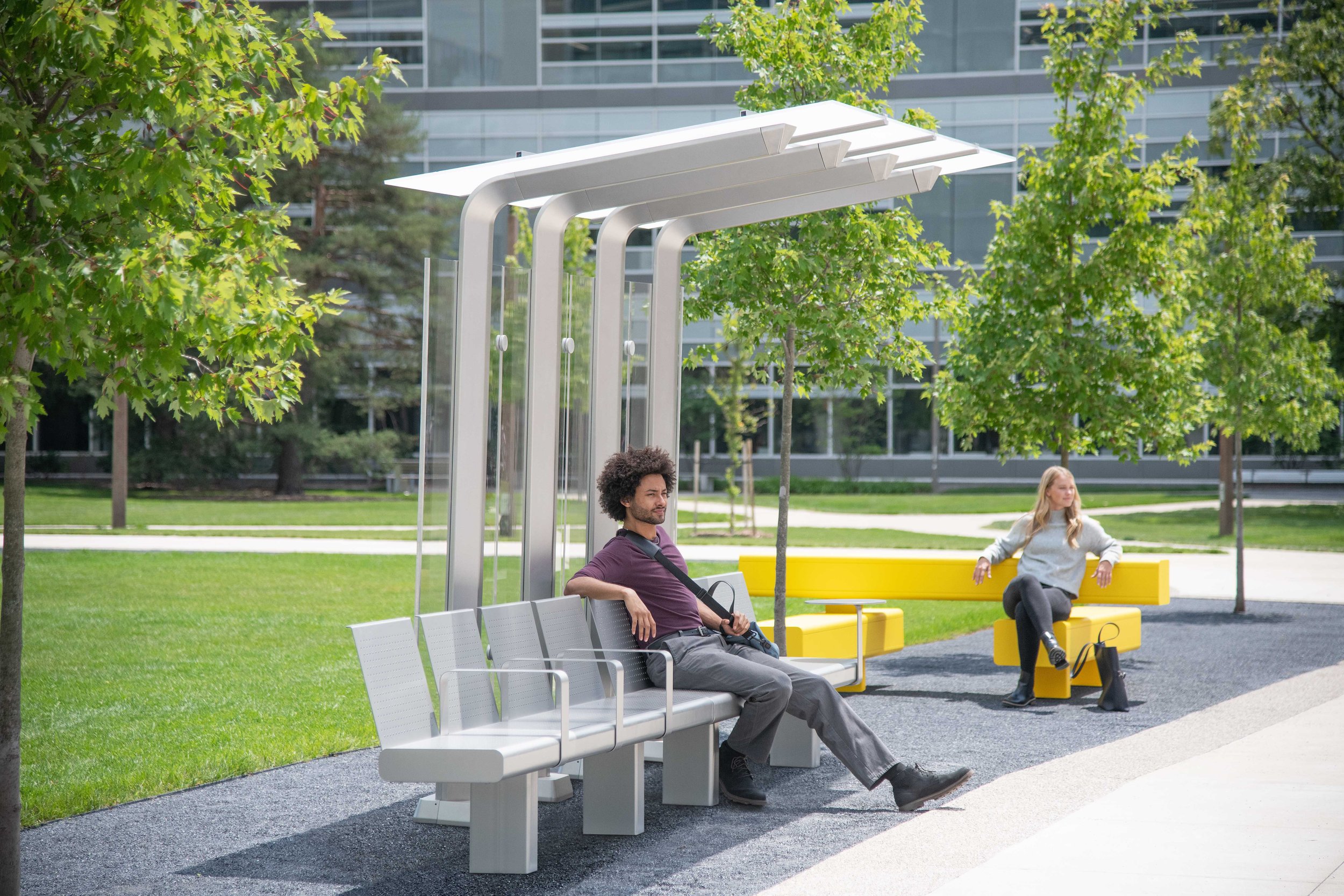
The Theory Collection
A bold reimagining of transit furniture for Landscape Forms.